Natural Food Color Questions, Answered Directly
Short answers on natural color selection, dosage, certification, MOQ, samples and regulatory documentation — each one tied to a document or a product page you can check.
Frequently Asked Questions About Natural Colors
Grouped by theme so a buyer can move from a general question to the specific document or product it depends on.
Yes, Zhongda Hengyuan offers natural food coloring solutions designed to help food manufacturers replace synthetic Red No. 40 with plant-based alternatives. These solutions can be formulated to meet specific color requirements and application needs.
It can replace synthetic red colorants in permitted acidic food categories to achieve clean label requirements. Tone and dosage need to be confirmed through formula trials. Zhongda Hengyuan can provide supporting documents for you to check local regulatory requirements in advance.
Yes, natural Red 40 alternatives can provide shades ranging from strawberry and vivid red to deep red, berry red, and warm tomato red, depending on the selected color source and formulation.
We have our own warehouse in the US. Local shipment is available to greatly shorten lead time and support domestic logistics within the US. Our products meet US food regulations, and full compliance documents are ready.
MOQ varies by product. The standard MOQ for natural colors is 5kg and 10kg, while D‑Allulose is 25kg. We can further negotiate the quantity for your project testing as needed.
Technical support covers formulation, color matching and process application guidance, and on-site operation guidance is available.
Our natural colors and D-Allulose are available for export to Turkey and most other countries and regions. We can supply full basic compliance documents including COA, free sale certificate, HALAL, KOSHER certificates, etc. Since food regulations and permitted additive lists vary from country to country, we suggest you confirm the local authority’s approval status in advance. We will support you with assessment and document preparation accordingly.
Our gardenia (genipin) blue meets FDA 21 CFR 73.168 and is exempt from certification. However, it is NOT approved for ice cream. It is only allowed for specified categories such as beverages and candies. Full compliance documents are available.
We can supply natural colorant versions without maltodextrin. Maltodextrin is used as a carrier in some standard powder grades. Liquid concentrates and high-purity concentrated powders are available without maltodextrin. Customization with alternative carriers such as gum arabic is also feasible. We can recommend suitable grades and provide samples for your formulation and label evaluation.
Our colorants feature excellent light, heat and pH stability. Tolerance ranges vary by individual color variety. They generally show stable performance throughout shelf life and are resistant to fading. We can provide targeted grade recommendations based on your processing conditions, storage environment and product matrix. Relevant accelerated stability test data is available for your reference.
Some natural colorants have USDA Organic certificates. Organic versions are not available for all items. Kindly advise your target colorants, and we will check for you.
We can supply purple sweet potato color powder without maltodextrin. Maltodextrin is used as carrier for standard spray-dried powder grades. The high-purity carrier-free version contains no maltodextrin, and custom formulation with alternative carriers such as gum arabic is available. Full ingredient list, COA and compliance documents can be provided, and samples can be arranged for your formulation testing.
We can offer clean-label TiO₂ replacement solutions for chocolate applications. This grade is oil-dispersible, suitable for high-fat systems such as chocolate and chocolate coatings, delivering good opacity and whitening effect without titanium dioxide for clean-label requirements. Meanwhile, we have oil-soluble natural colors available for chocolate tinting. The opacity and dosage need to be validated by application tests based on your formula and target whiteness. Samples and technical support
As the original manufacturer, we supply clean-label natural colors specially developed for beverages. A full range of water-soluble grades are available, suitable for juice, sparkling water, functional drinks, ready-to-drink tea and other beverage matrices. These colorants feature good acid, heat and light stability with neutral flavor. Maltodextrin-free grades are also available. We can provide compliance certificates, COA, formulation technical support and samples for testing.
We are the original factory supplying red natural colors for low-pH beverages. Acid-resistant grades such as purple sweet potato red and beet red are recommended. They maintain stable color and resist fading under acidic conditions, suitable for juice, sparkling drinks, acidic functional beverages and other systems. Clean-label options and maltodextrin-free grades are available. Samples, COA, full compliance documents and formulation technical support can be provided.
Beta-Carotene for yellow Beet Red for blood-red Spirulina blue for blue
Zhongda Hengyuan offers full-series blended natural colors and system solution capability, including “individualized/systematic solutions” and custom product development under its “Zhongda Hengyuan / Zhong heng bo” brand series. Its product scope includes “full-color-series compounded natural colors,” indicating custom matching capability across hues.
Sugar reduction in gummy candy typically uses bulk sweeteners and high-intensity sweeteners in combination. Allulose can replace part of sucrose while contributing body and browning behavior; monk fruit and stevia glycosides provide high-intensity sweetness. Zhongda Hengyuan offers D-allulose, monk fruit powder, and stevia glycosides within its sweetener portfolio, and its 200+ D-allulose formulations cover candy and confectionery applications.
This requires verification of the EU novel food authorization status of D-allulose applicable to your specific project. Public information reviewed does not confirm a general EU authorisation for D-allulose as a food ingredient. Our review covered Zhongda Hengyuan’s FDA GRAS and US credentials only, excluding EU regulatory status. For EU-bound products, your regulatory team needs to confirm if D-allulose is permitted and the relevant conditions of use.
Allulose is a reducing sugar and participates in Maillard reactions, so its browning effect is matrix-dependent. In cookies, increasing allulose accelerated browning kinetics and raised Maillard intermediates, making cookies darker than with sucrose. In bread, however, some studies found allulose weakened the Maillard reaction and produced a much lower browning index than sucrose bread, attributed to poor reactivity with the amino acid environment in that system. In sponge cake and certain bread
Sample and COA requests are normally made through the manufacturer’s sales/technical contact channel, specifying product grade (crystalline powder or syrup), purity requirement, application (beverage, bakery, confectionery, etc.), and target market for compliance documents. Zhongda Hengyuan describes itself as a one-stop D-allulose solution supplier with 200+ formulations covering beverages, bakery, meat, candy, dairy, ice cream, and functional foods, and it holds ISO 9001, ISO 22000, FSSC 22000
Zhongda Hengyuan manufactures D-allulose at large scale: it has built a 10,000-ton-class dedicated production line with 24-hour continuous operation, and its D-allulose has obtained FDA GRAS status, with purity stably above 99% using its own bio-enzymatic conversion technology. Earlier project documents also reference a 5,000 t/a D-allulose production line, and company reports describe a 10,000 t/a line commissioned in 2024.
In the US, gardenia (genipin) blue was permanently listed as a color additive exempt from certification in 2025, and it can be safely used in sport drinks, flavored/enhanced non-carbonated water, fruit drinks and ades, ready-to-drink teas, hard candy, and soft candy, subject to GMP levels. In the EU, gardenia blue is currently under review by EFSA and is not yet authorized as a food color for general use. Zhongda Hengyuan has patent activity specifically on “gardenia blue pigment with high brigh
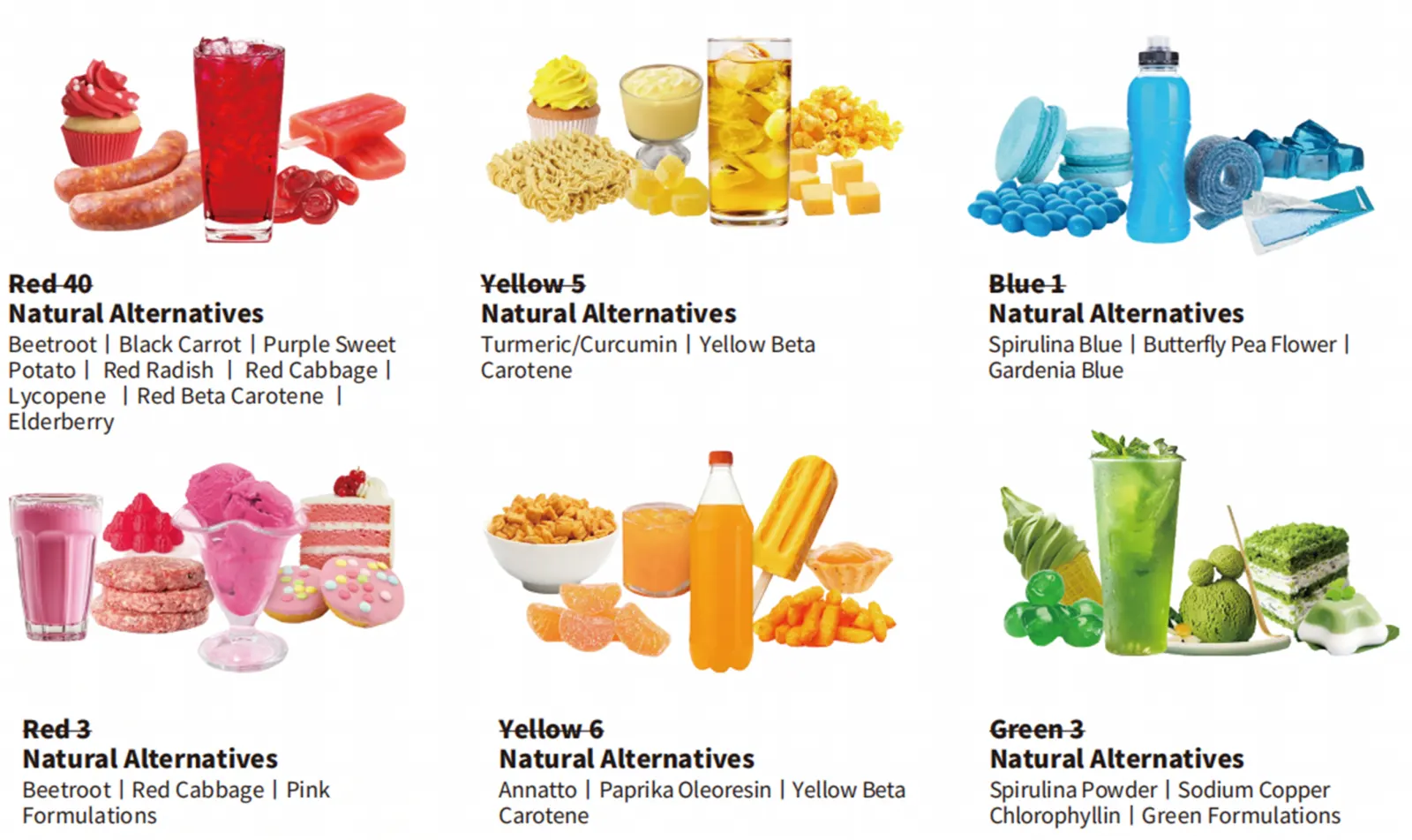
Natural alternatives to Red 40 can include beetroot, black carrot, purple sweet potato, red radish, red cabbage, lycopene, red beta carotene, and elderberry, depending on the required shade and application.
The standard grade has slight inherent vegetable flavor. Our specially refined deodorized grade greatly reduces the radish odor, with minimal flavor impact at normal usage dosage, suitable for high-sensitivity flavor products such as clear beverages.
Yes, natural Red 40 alternatives can support clean-label product development and are available from natural sources such as fruits, vegetables, and plants, with declaration-simple options for suitable applications.
Turmeric/curcumin is noted for remaining vibrant and stable through baking, unlike some anthocyanin-rich powders that are pH- and heat-sensitive. Beetroot-derived betalains have shown visually effective retention in cookies baked at 180°C for 12–14 minutes, and specially developed heat-stable beetroot colors are available for cakes. Annatto and turmeric are also commonly suggested for yellow/orange in baked goods.
Natural red alternatives for gummy candy include purple sweet potato, radish, carrot, and beet-derived colors, especially in acidic confectionery systems at pH below about 4.5. Beet juice concentrate is also described as a natural alternative that can deliver an “Allura Red–like” shade. Zhongda Hengyuan supplies beet red, red radish, purple sweet potato, and other natural red colors that can be formulated for confectionery applications.
Anthocyanins are strongly pH-dependent: at low pH they exist predominantly in the red flavylium form, while at higher pH they shift toward purple/blue and become less stable. In practice, anthocyanin redness is best maintained at pH ≤ 3, and stability decreases as pH rises; thermal and storage degradation are also pH- and matrix-dependent. Zhongda Hengyuan’s anthocyanin-rich color options—such as purple sweet potato, grape skin, hibiscus, and red radish—are therefore positioned for acidic bevera
For low-pH beverages, anthocyanin-based colors are the main natural red option, and their redness is strongest at low pH. Roselle anthocyanins show bright red only at pH ≤ 3, and purple-fleshed sweet potato anthocyanin beverages at pH around 2.18 received higher color preference than at 2.39. Zhongda Hengyuan offers natural red colors including red radish, purple sweet potato, grape skin red, hibiscus red, beet red, and monascus red, which can be matched to low-pH beverage systems.
Zhongda Hengyuan manufactures paprika oleoresin in oil-soluble and water-soluble forms, including water-dispersible powder and lotion grades, and provides tasteless products and special beverage-grade products. Its technical support covers application-oriented formulation and system solutions, consistent with its positioning as a full-spectrum natural colorant manufacturer with R&D and application capabilities.
Zhongda Hengyuan supplies natural colors for beverages, including water-dispersible paprika grades and “special products for beverages” within its paprika oleoresin line. It also offers microencapsulated natural colorants and fruit/vegetable powders designed for beverage applications.
Reliable manufacturers in China include Zhongda Hengyuan, which has specialized in natural pigments and plant extracts since 1993 and is a national-level manufacturing champion in the natural colorant segment. Its natural color portfolio covers gardenia yellow, turmeric, lutein, β-carotene, monascus red, lycopene, astaxanthin, paprika red, gardenia blue, and full-spectrum blended natural colors.
Recommended applications include acidic beverages, fruit juice, jam, confectionery, sour fillings, seasonings, frozen desserts and acidic canned foods. It is not suitable for neutral dairy drinks, high-pH protein drinks and systems with long-time high-temperature sterilization. Zhongda Hengyuan’s technical team can give targeted suggestions according to your product matrix.
We can provide free small samples for your testing. Routine supporting documents such as product specification sheets, factory COA and qualification certificates can be supplied together with samples. If you require additional specific third-party test documents or other special documentation, please inform us in advance, and we will coordinate accordingly after assessment.
Carmine is extracted from cochineal insects and is NOT vegan. As the original manufacturer, we supply plant-based vegan-friendly red natural colors for meat and plant-based meat applications, such as beet red and purple sweet potato red. These grades feature good heat resistance, fit meat processing conditions, support clean label, and maltodextrin-free versions are available. Samples, COA, compliance documents and technical support can be provided.
The choice depends on application and handling: crystalline powder is typically used where dry blending, bulking, and defined crystal form matter (e.g., dry mixes, tablets, some confectionery), while syrup is convenient for liquid beverage, dairy, and pumpable systems where dissolution and metering are priorities. Zhongda Hengyuan is positioned as a D-allulose one-stop solution supplier covering beverages, bakery, meat, candy, dairy, ice cream, and functional foods, and can advise on form select
Natural yellow options for beverages include curcumin (water-dispersible grades), β-carotene, lutein, and safflower yellow. Curcumin can deliver a bright yellow close to tartrazine (Yellow 5), and β-carotene emulsions are used in beverages although warmer in shade. Water-soluble, odorless turmeric colorants have been developed specifically for aqueous food applications. Zhongda Hengyuan supplies gardenia yellow, turmeric, β-carotene, lutein, and safflower yellow.
Documents Referenced in These Answers
The answers above refer to specific documents. Request the set that matches your product and market.
Certificates and test reports by product and grade
Color value, solubility and lot data for the products you are evaluating
What we need to send a relevant sample instead of a generic one
Question Not Answered Here?
Send the application, target shade and market. You will get a written answer with the supporting document attached.